Design
Ofspace vs Other Design Agencies: How to Choose the Right Partner

May 4, 2026
January 22, 2026
Many growing SaaS and fintech products struggle even after hiring a design agency, not because of their product, but because the agency lacks the capability to handle real complexity and scale.
Ofspace has worked with more than 200+ SaaS and fintech products, collaborating closely with founders and product teams at different stages of growth.
Over time, one pattern stands out: many design agencies focus on creating attractive interfaces, but fail to build scalable design systems.
This article compares Ofspace with traditional design agencies to help decision-makers choose a design partner capable of driving long-term product growth.
Here is a Quick Table about Ofspace vs Other Design Agencies
Common Problems Businesses Face When Comparing Design Agencies
Choosing between design agencies can be confusing, especially when every agency claims to offer the best solution.
We believe, without clear evaluation criteria, businesses often struggle to understand which agency can truly support their product goals, scale, and long-term needs.
Based on our research, we have identified some major problems which are commonly faced by most businesses.
Let’s discuss some and match if you ever faced one.
Key Problems
1. Strong Portfolios Without Clear Business Impact
Many agencies present visually impressive work, but rarely explain why those designs mattered.
Decision-makers are left guessing how the work improved usability, supported growth, or performed once real users and scale were involved.
2. Difficulty Identifying True Product or Enterprise Experience
From the outside, agencies often look similar.
It’s not always clear which teams have actually worked on complex SaaS or fintech products with multiple user roles, permissions, and evolving requirements and which ones haven’t which creates confusion between actual product & experience.
3. Inconsistent Pricing and Unclear Scope Definitions
Nowadays, choosing agencies has become difficult but it becomes more difficult when pricing models, deliverables & timelines vary widely.
Without clear measurement teams struggle to evaluate cost against long- term value.
4. Uncertainty Around Collaboration and Ownership
Many businesses can’t tell whether an agency will integrate with their product team or simply deliver screens and move on.
This creates risk, especially for products that require ongoing iteration and alignment.
5. Lack of Measurable Design Outcomes
Without clear metrics such as usability improvements or workflow efficiency it becomes hard for decision makers to assess whether design investment is paying off.
Comparing design agencies is nowadays an important fact, because not all the agencies meet your criteria and give the best solution for you.
If anyone can’t question themselves, “Why do I need to compare? Then they will end up choosing one which will not meet their goal.
For this, we’ve added some factors to see why it is important to compare before choosing any agency.
Why It’s Important to Compare Design Agencies
Not all design agencies work the same way. Some focus on visuals, others on user experience, and only a few think at the product and system level.
Comparing agencies carefully helps businesses understand which partner can truly support their growth, scale, and long-term product success.
First you asked yourself how to compare, Now you will see why it is important to do so
Key Reasons
1. To understand the Right Fit
Not every agency is built for complex products. Comparing agencies helps teams understand who can actually support multiple user roles, workflows, and long-term product evolution, not just deliver isolated design tasks.
2. To reduce the same work done again & again
When the wrong agency is chosen, teams often face redesigns, UX inconsistencies, and development slowdowns later.
A thoughtful comparison reduces the risk of rework that compounds as the product scales.
3. To understand Visual Quality alone is Not A Reliable Signal
Many agencies can produce attractive screens. Comparison makes it easier to identify which teams think in systems, understand enterprise constraints, and design for real-world usage beyond the UI.
4. To understand Design is an Investment not a Cost Line
By evaluating pricing models alongside outcomes, businesses can assess whether an agency’s work contributes to measurable results instead of one-off deliverables.
5. To minimize Partnership Risk
Design agencies often become long-term collaborators. Comparing how agencies work, communicate, and take ownership helps decision-makers choose partners with confidence rather than relying on assumptions.
To make this decision clearer, let’s walk through a step-by-step approach for choosing a design agency that aligns with your product needs.
How to compare Design Agencies : A step- by- step guide
To help decision makers cut through the noise and make an informed decision, this step-by-step guide explains how to evaluate agencies based on real capabilities, approach, and fit.
1. Clarify Your Goals First
Before comparing design agencies, be clear about what your actual goal is. Many projects fail because goals are not measured or inconsistent.
Define the exact problem you want the design agency to solve and what you actually want to make your product a success.
Key things to measure
- What Business or product problem needs design support.
- Your budget range and expected timeline
- What outcomes matter most ( usability, conversion, consistency)
2. Audit the Portfolio
Don't just look at the colors. Most agencies put their prettiest screens on their homepage.
Key things to look for
- Does the agency explain the problem they solved or just show the final UI?
- Have they worked on products similar to exactly what you tell them by?
3. Evaluate the thinking process
There are two types of agencies: 1. Strategic and 2. Tactical
- Tactical agencies do exactly what you tell them. If you ask for a button, they give you a button.
- Strategic Agencies (like Ofspace) They ask why you need that button. They challenge your assumptions and focus on business goals like user retention and conversion rate.
4. Analyze the Pricing & Engagement Model
This is where the biggest differences lie. You need to decide which "Financial Fit" works for your product’s current stage
- Hourly pricing often leads to higher costs when projects take longer than expected.
- Fixed pricing works for small, one-time tasks but becomes limiting when product needs change.
Ofspace works in focused sprints tied to clear goals, not just on hours.
This approach keeps costs predictable while supporting product changes and long-term growth.
5. Understand How Success and ROI Are Measured
Design should support measurable outcomes, not just aesthetics. Ask how the agency defines and evaluates success.
Red flags to watch out for
❌ The agency talks mostly about visuals but avoids discussing product logic, users, or scale.
❌ They cannot explain their design process or how decisions connect to business goals.
❌ Pricing is vague, with no clarity on scope, ownership, or long-term support.
❌ They act as executors of tasks instead of questioning assumptions or giving strategic input.
Why Ofspace is your ultimate Design Partner
Ofspace is not only a Design Agency as it takes in consideration of other related fields for instance it follows strategic steps to create ideas, analyze, test and make best decisions for you.
It is your responsibility whether to choose one agency which only focuses on visuals or another one which makes a strategic plan and gives the best output.
It is better to make decisions by seeing original works on Behance, Dribble, Works & make strategic decisions. See how they work and give your idea a life.
1. Enterprise-Focused Product Design
Ofspace is a digital design agency specializing in scalable UI/UX solutions for complex digital products.
The team works with startups and enterprises building products that must support multiple users, evolving requirements, and long-term growth.
2. Design That Supports Business Outcomes
Ofspace combines brand identity, UX/UI design, and product strategy to create assets that support fundraising, customer acquisition, and sustainable growth going beyond surface-level design execution.
3. Proven Impact Across the Startup Ecosystem
Ofspace’s work has delivered measurable results across the global startup ecosystem.
Their design contributions have supported Y Combinator–backed companies like Envoy are raising $111M+, helped Highglobe secure $10M in Series A funding, increased Dorik’s sales by 55%, and improved MAC Fitness’s ratings from 1-star to 5-star.
4. Experience Across Scale and Markets
With 200+ projects delivered across 20+ countries, Ofspace has experience scaling products from early MVPs to enterprise-level platforms, maintaining clarity and consistency at every stage.
5. User-Centric Design at Scale
Ofspace’s design approach has impacted 1M+ daily active users, with a strong focus on usability, retention, and conversion metrics that matter for growing products.
6. Fast Execution Without Compromising Quality
To support fast-moving teams, Ofspace delivers an average 48-hour turnaround for design samples, helping companies move quickly without the delays common in traditional agency models.
Proven Case Studies across Real Products
Highglobe
Problem
Highglobe struggled to attract investors due to an unclear brand narrative and positioning.
Result
After Ofspace refined their brand story and positioning, Highglobe secured $14M in Series A funding within six months.
Dorik
Problem
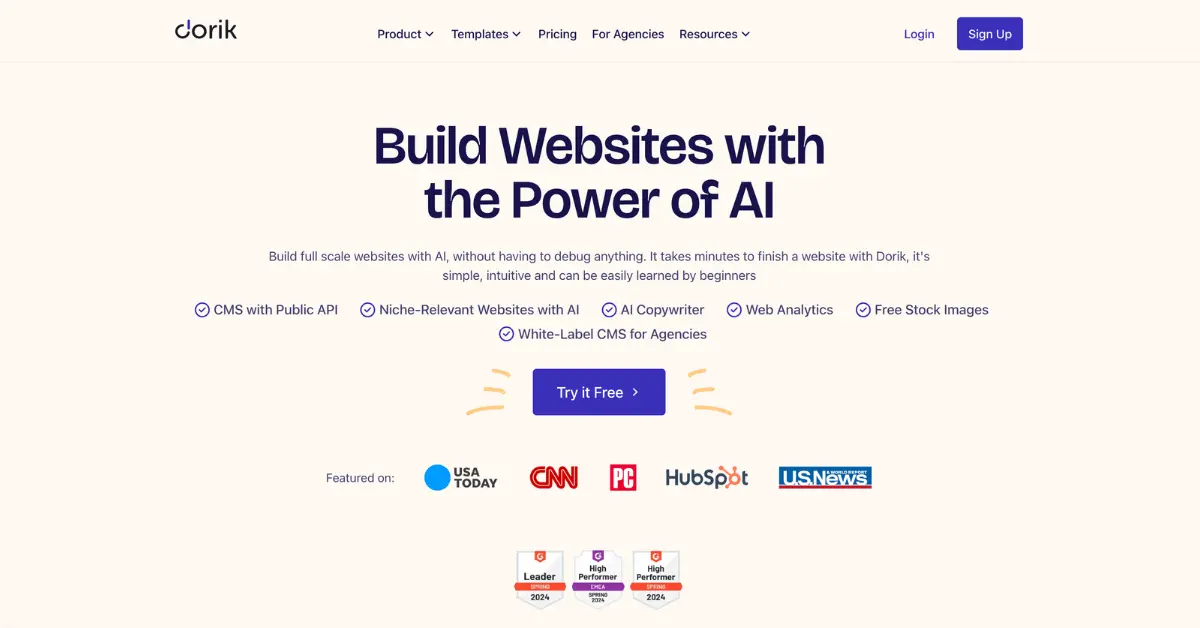
Dorik needed to reach a wider customer base and improve how their product value was communicated.
Result
After Ofspace revamped their branding and product communication, Dorik achieved a 55% increase in sales within three months.
MAC Fitness
.webp)
Problem
MAC Fitness struggled with poor customer reviews and low brand trust.
Result
After Ofspace improved how the brand connected with its audience, customer ratings increased from 1-star to 5-star, restoring trust and credibility.
Ofspace at a Glance
- $111M+ raised by clients using their designs.
- 200+ successful projects delivered.
- 1M+ users impacted by their UX.
- 48-Hour turnaround for design samples.
To compare Ofspace vs other agencies, Here is a proven cost comparison table made for you
Final Thoughts
Choosing the right design agency directly impacts how well your product scales and performs over time. While many agencies focus mainly on visuals, enterprise products demand strategic thinking, strong UX foundations, and long-term alignment.
This is where Ofspace stands apart. As a design partner, Ofspace helps teams reduce complexity, build scalable systems, and align design with business goals.
Their approach to enterprise UI/UX design and product design for SaaS and fintech ensures consistency and growth.
FAQs
How is Ofspace’s pricing different from a traditional design agency?
Traditional agencies often use "black box" pricing or hourly rates that can spiral out of control. Ofspace focuses on transparent, fixed-price project milestones or dedicated sprint models. This gives you predictable costs and prevents the "hidden fees" often found in old-school agency contracts.
Does Ofspace only handle the look of the app, or do they help with strategy?
Yes, Ofspace acts as a Strategic Partner. They start with product discovery to ensure the design actually solves business problems like high churn or low conversion rates.
Can Ofspace work with my existing development team?
Yes. Unlike many agencies that hand over messy files, Ofspace builds comprehensive Design Systems in Figma.
This makes the handoff to your developers seamless, reducing "dev-debt" and ensuring the final product looks exactly like the approved design.
How fast can I expect to see results compared to other firms?
Traditional agencies often take weeks just for "research." Ofspace is built for startup velocity, often delivering initial design samples within 48 hours and maintaining a weekly sprint cadence to keep your project moving toward launch.